

Overview
Bamboo is an all-in-one software platform built to help businesses stay compliant, efficient, and profitable. From cultivation and manufacturing to packaging, inventory, distribution, and sales, Bamboo manages every stage of a product's lifecycle within a single ecosystem.
As customers scaled their operations, one challenge became increasingly apparent: while Bamboo tracked products exceptionally well, customers lacked a centralized way to manage the raw materials and packaging components required to produce those products.
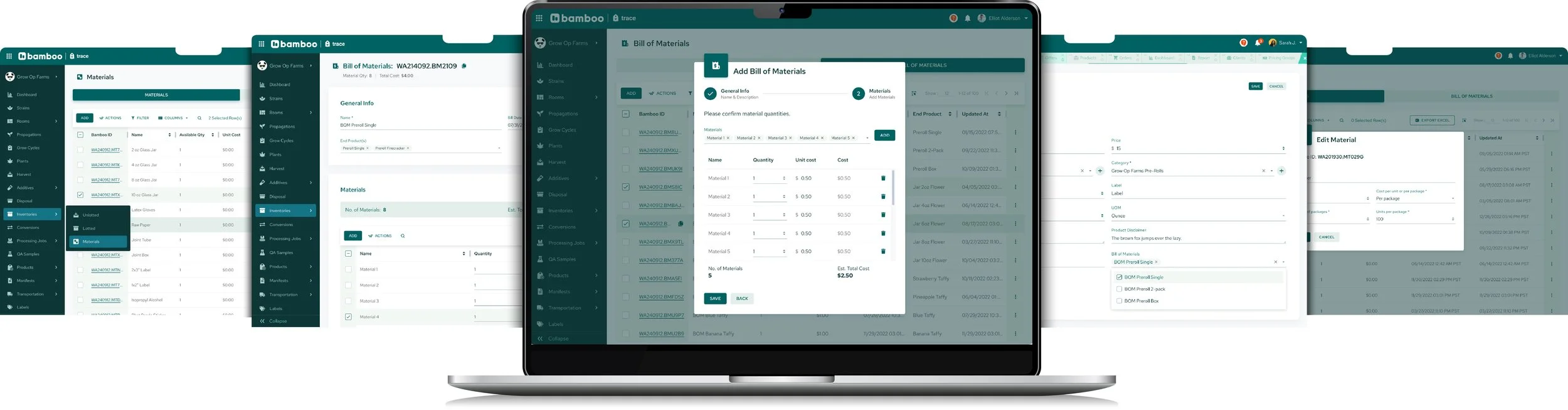
To solve this, our team designed and launched a comprehensive Bill of Materials (BOM) feature that enables customers to organize production materials, create reusable Bills of Materials, and associate them with one or multiple finished products.
The result was a more connected manufacturing workflow that improved inventory visibility, reduced operational friction, and laid the foundation for more accurate production planning.
Project
Duration
Tools
My Role
Bill of Materials Feature for Bamboo
3 months
Figma
UX/UI Designer
The Problem
Without a dedicated Bill of Materials system, customers often relied on spreadsheets or disconnected processes to answer questions like:
Which materials are required to manufacture a product?
How much packaging inventory is available?
Which products use a particular material?
What happens if a label, jar, or ingredient runs out?
How much material is consumed during production?
This created several operational challenges:
Limited visibility into production materials
Manual inventory reconciliation
Increased material waste
Difficulty forecasting purchasing needs
Higher risk of production delays due to missing components
Inconsistent manufacturing processes across facilities
Time-consuming setup for new products
Reduced profitability from inaccurate material planning
Goals
Primary Goals
Create a centralized inventory of production materials
Allow users to build reusable Bills of Materials
Connect BOMs to one or multiple products
Simplify material management for production teams
Business Goals
Reduce production waste
Improve inventory accuracy
Increase operational efficiency
Enable better purchasing decisions
Improve manufacturing consistency
Reduce production downtime caused by missing materials
Support scalable operations as companies grow
Pain points
Understanding the Users
Our primary users included:
Operations Managers
Manufacturing Teams
Inventory Managers
Compliance Managers
Through conversations with Bamboo users and internal stakeholders, we identified several recurring pain points.
Pain Points
Material inventories lived outside Bamboo.
Updating product recipes required repetitive manual work.
Packaging components were difficult to track.
Teams lacked confidence in available inventory before production runs.
Similar products required rebuilding the same material lists repeatedly.
The opportunity was clear: bring material management into Bamboo so users could manage production from beginning to end without leaving the platform.
Research Insights
Our research uncovered several themes that influenced the design.
Users wanted flexibility
Customers manufacture products with vastly different production processes. The solution needed to support simple products while remaining scalable for more complex operations.
Reusability mattered
Many products share identical packaging or ingredients. Users wanted to build a BOM once and reuse it across multiple products rather than recreate it repeatedly.
Inventory context was essential
Users wanted to understand not only what materials were required, but also whether sufficient inventory existed before production began.
Speed was critical
Manufacturing teams frequently create new products and update existing ones. The workflow needed to minimize clicks and repetitive data entry.
Design Challenge
The biggest UX challenge was balancing flexibility with simplicity.
A Bill of Materials can become highly complex, but many Bamboo customers only needed a straightforward way to:
Manage materials
Build reusable BOMs
Assign them to products
Our challenge was to create a workflow that felt approachable for first-time users while remaining powerful enough for larger operations.
Design Solution
We divided the experience into three connected workflows.
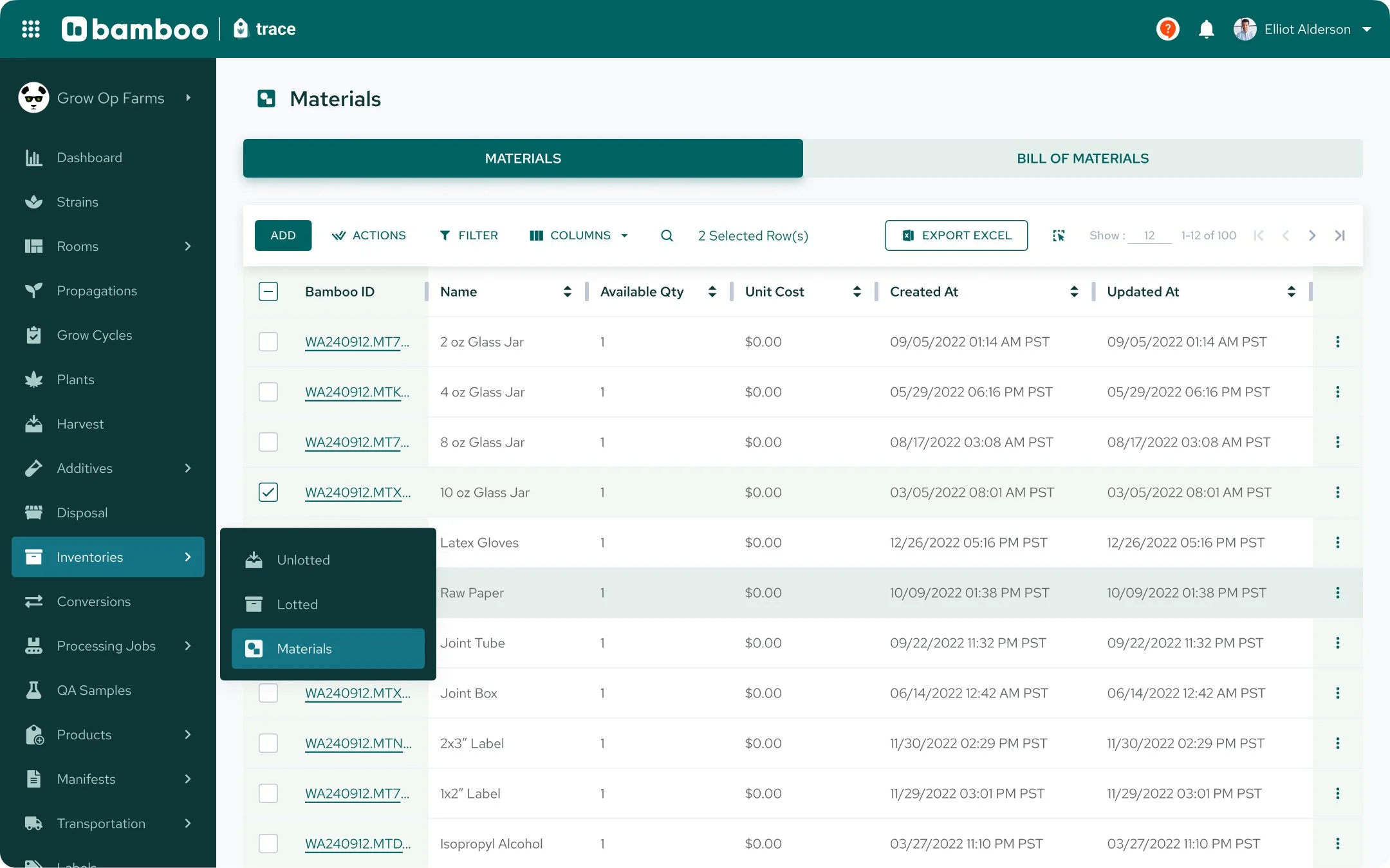
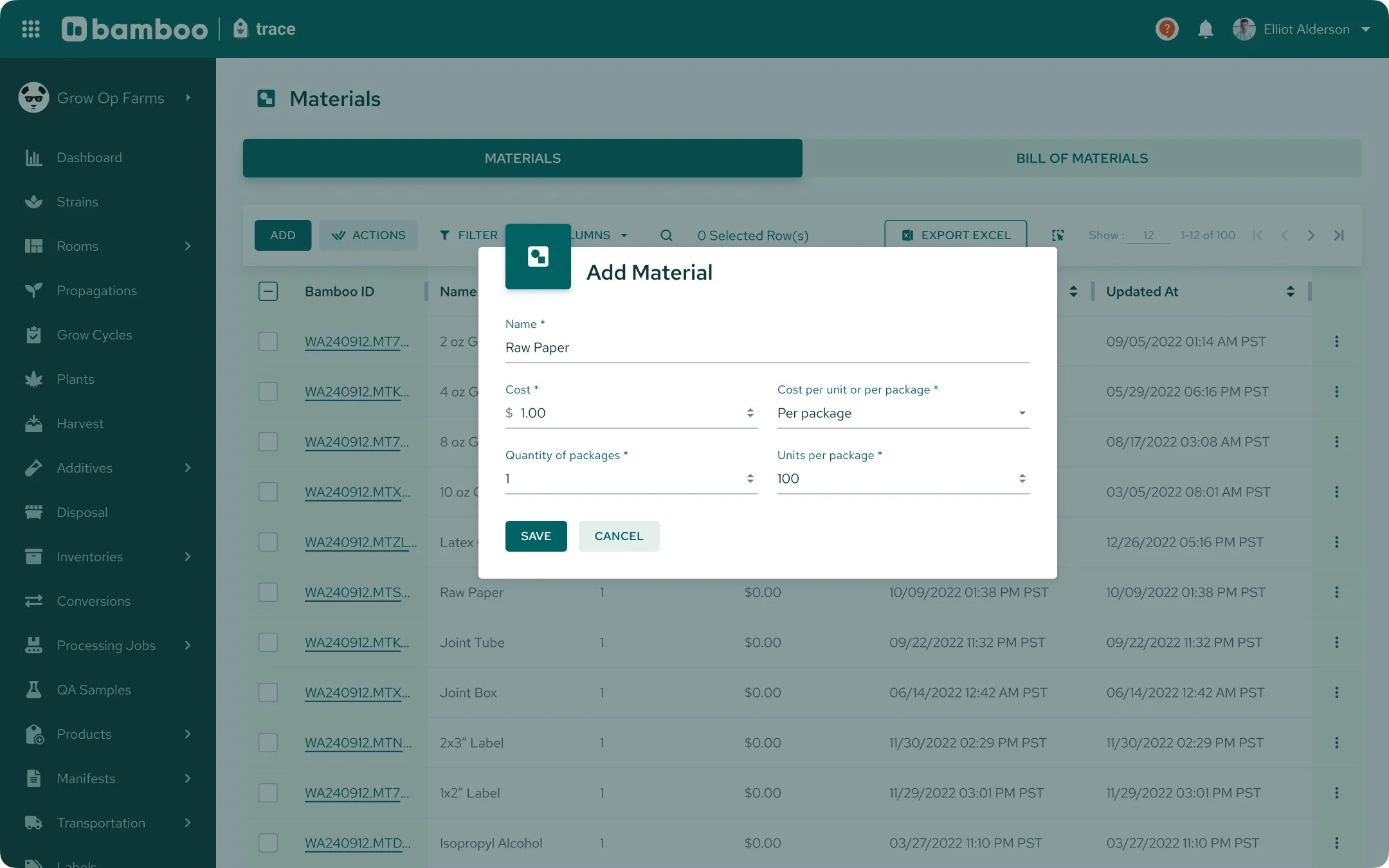
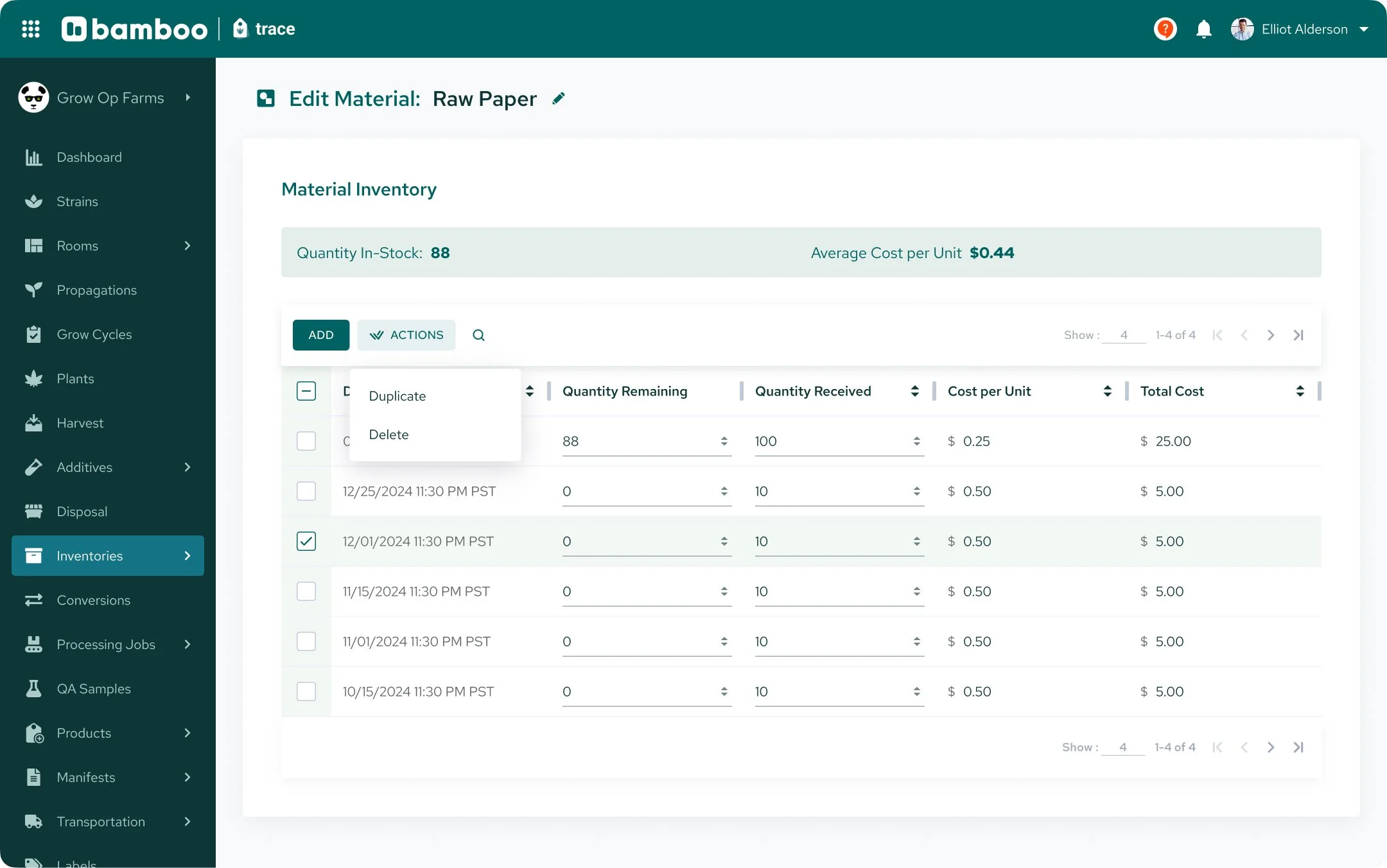
1. Build a Material Library
The first step was creating a centralized repository where users could manage every production material.
Materials included items such as:
Packaging
Labels
Jars
Bottles
Ingredients
Inserts
Each material stores important information including inventory quantity, units, costs, and other production details.
This library becomes the single source of truth for production materials.
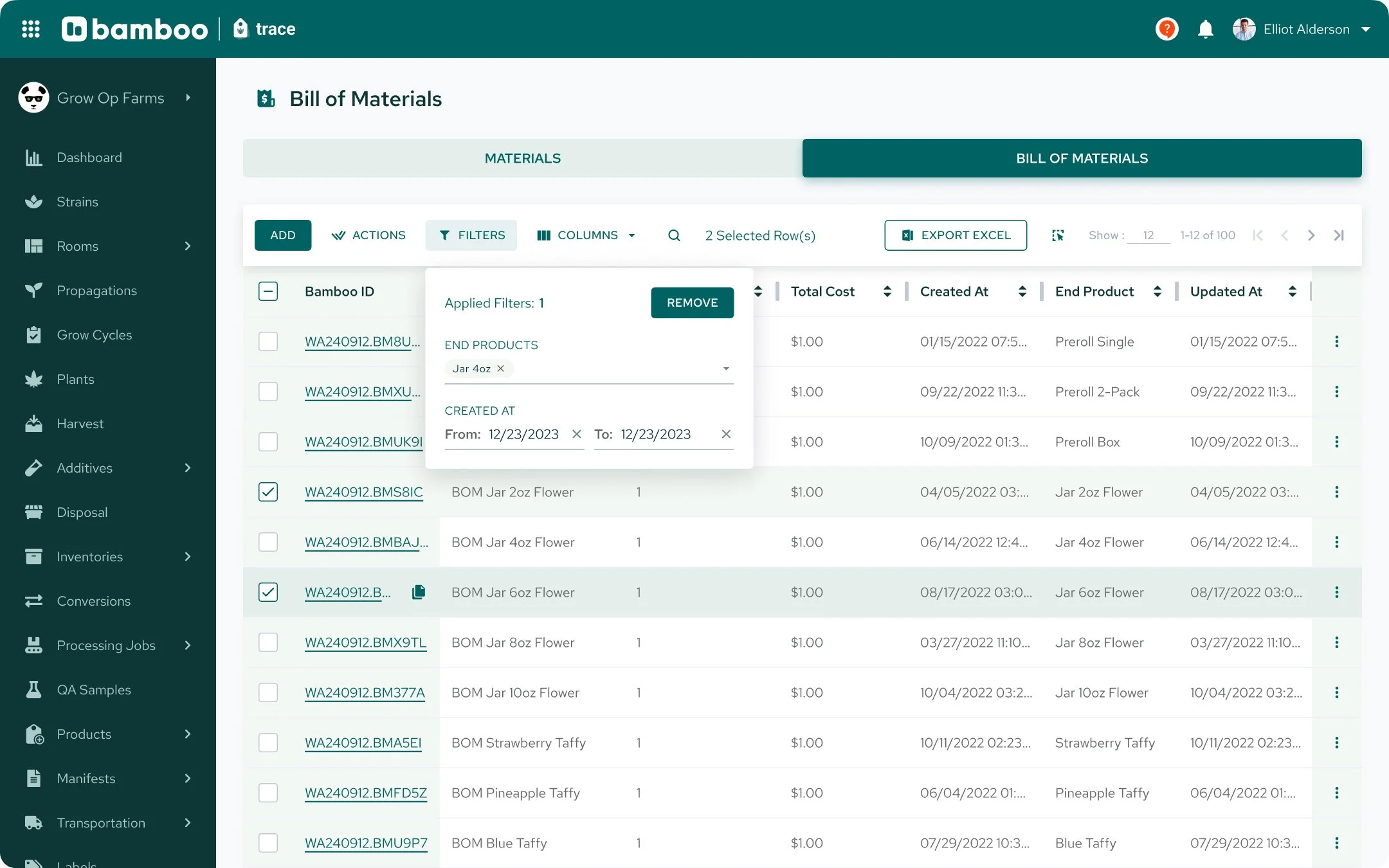
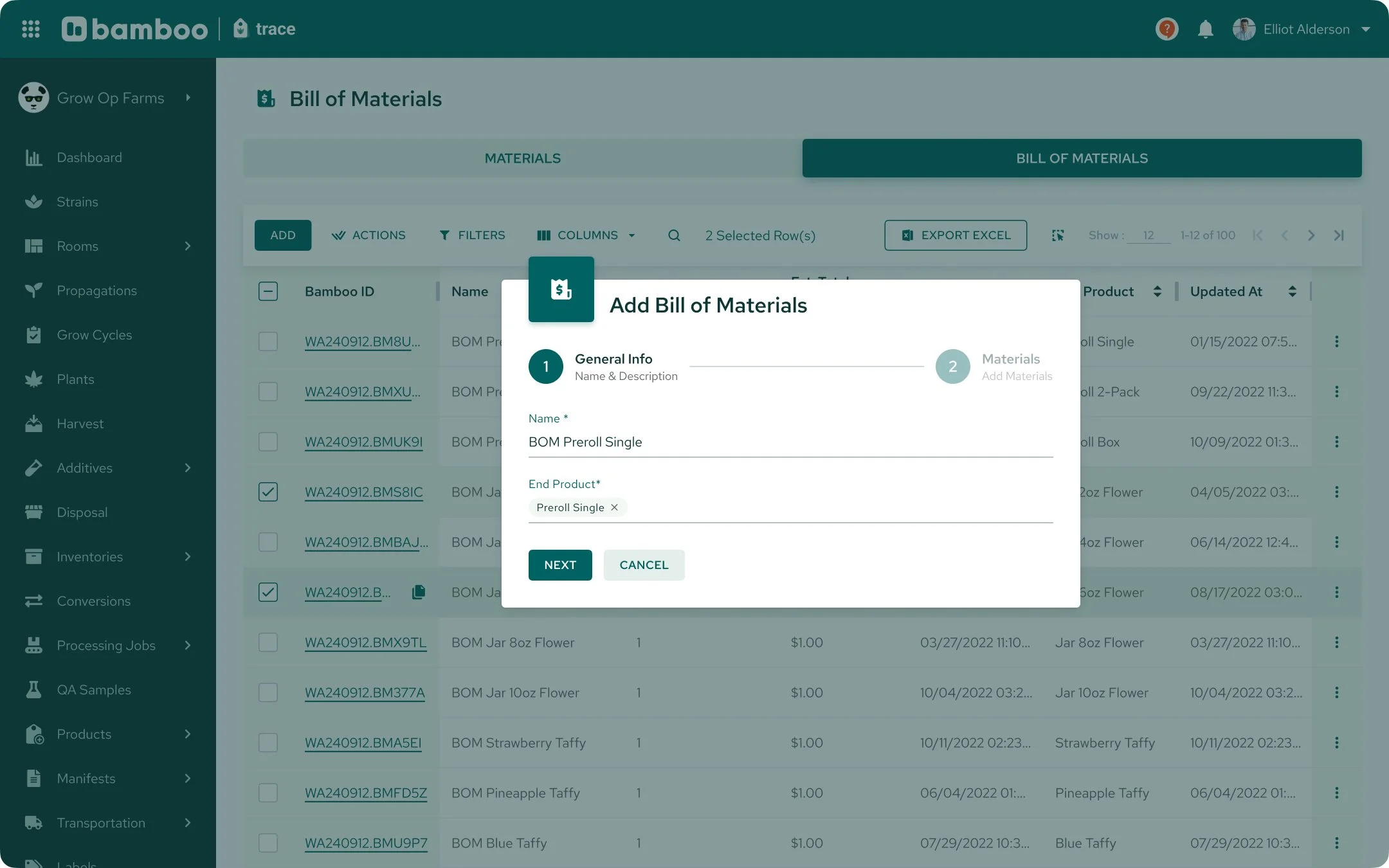
2. Create Bills of Materials
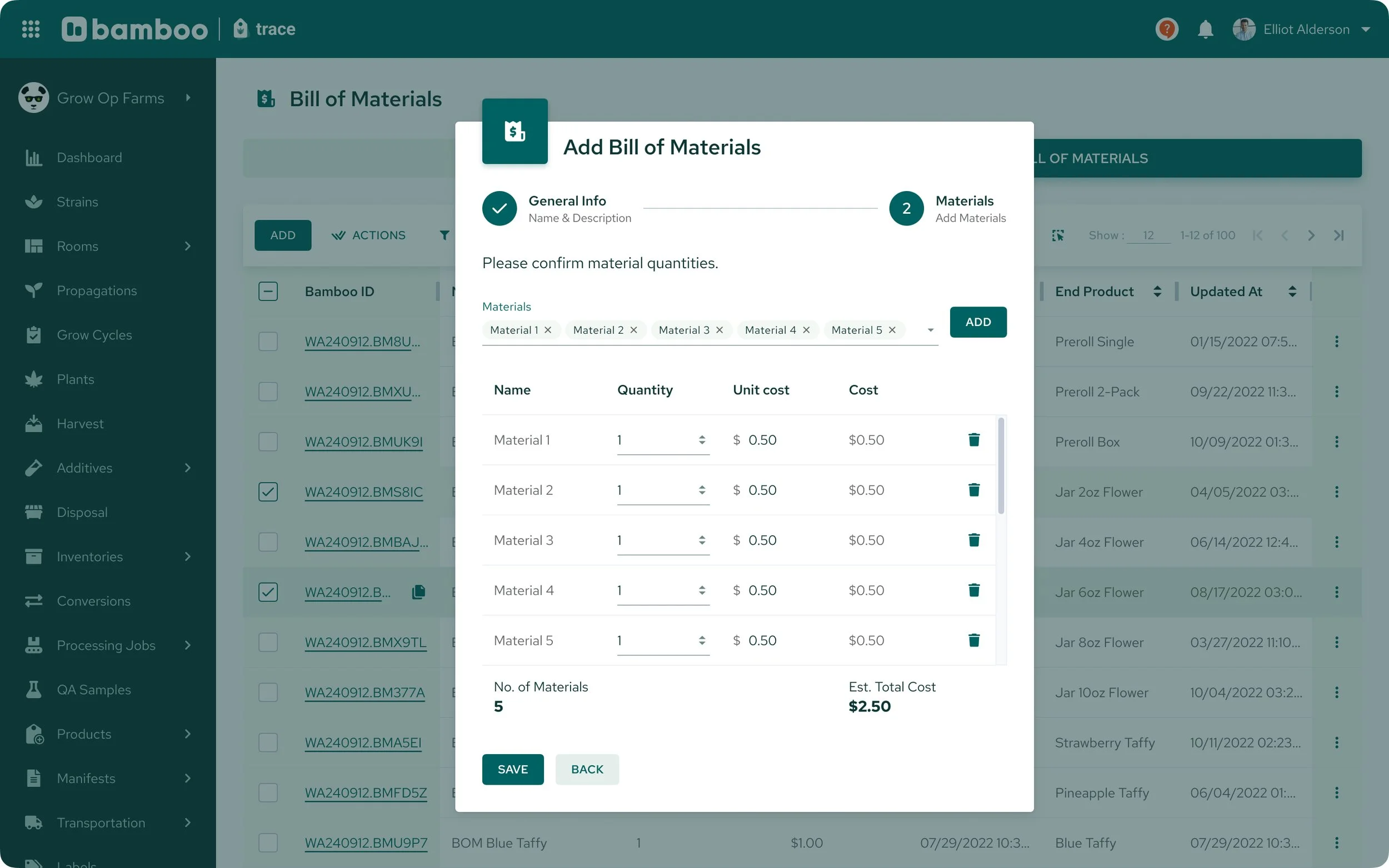
Once materials exist, users can assemble them into reusable Bills of Materials.
Each BOM defines:
Required materials
Quantity of each material
Units of measurement
Additional production information
Instead of manually recreating recipes for every product, users build them once and reuse them throughout the platform.
3. Assign BOMs to Products
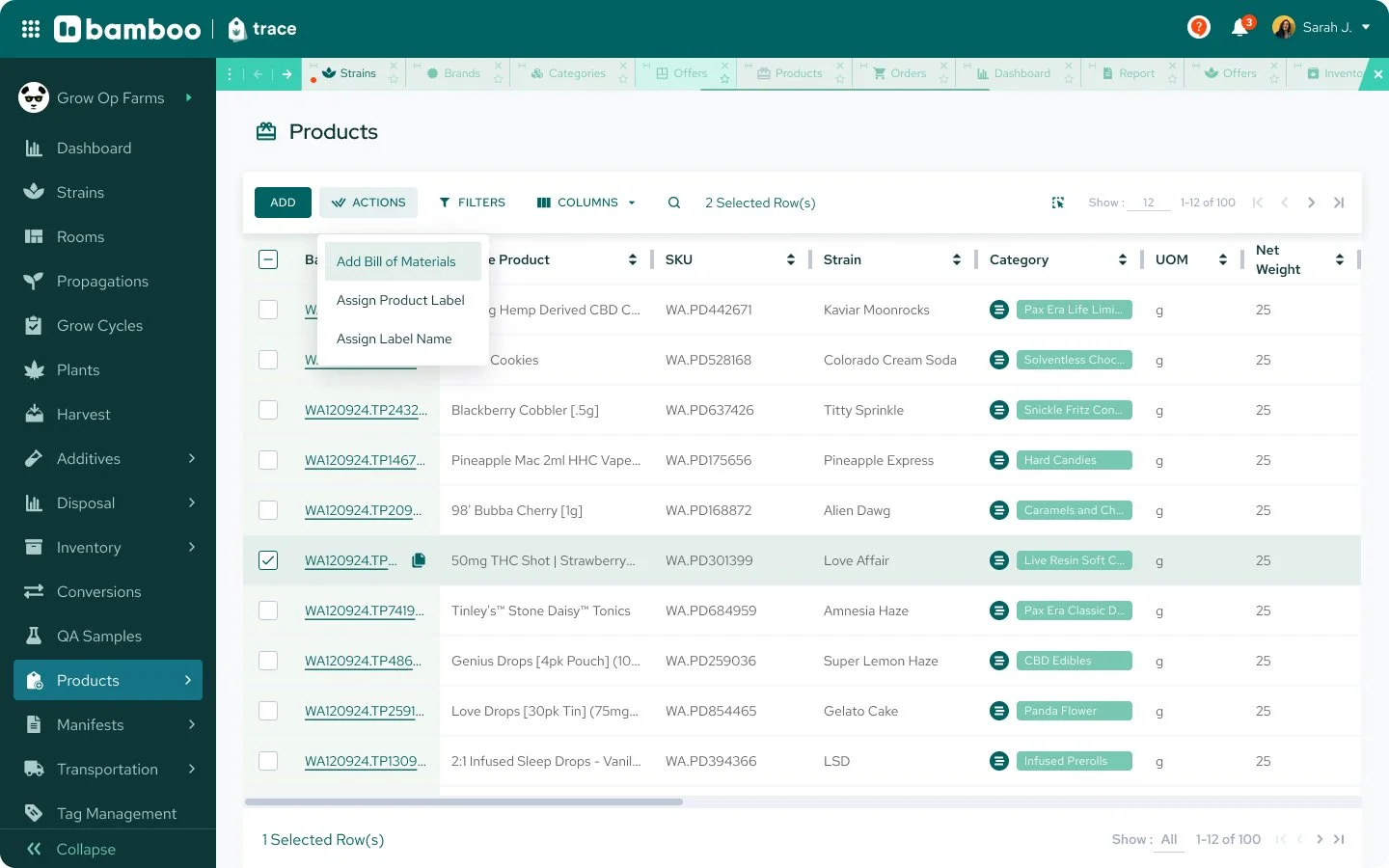
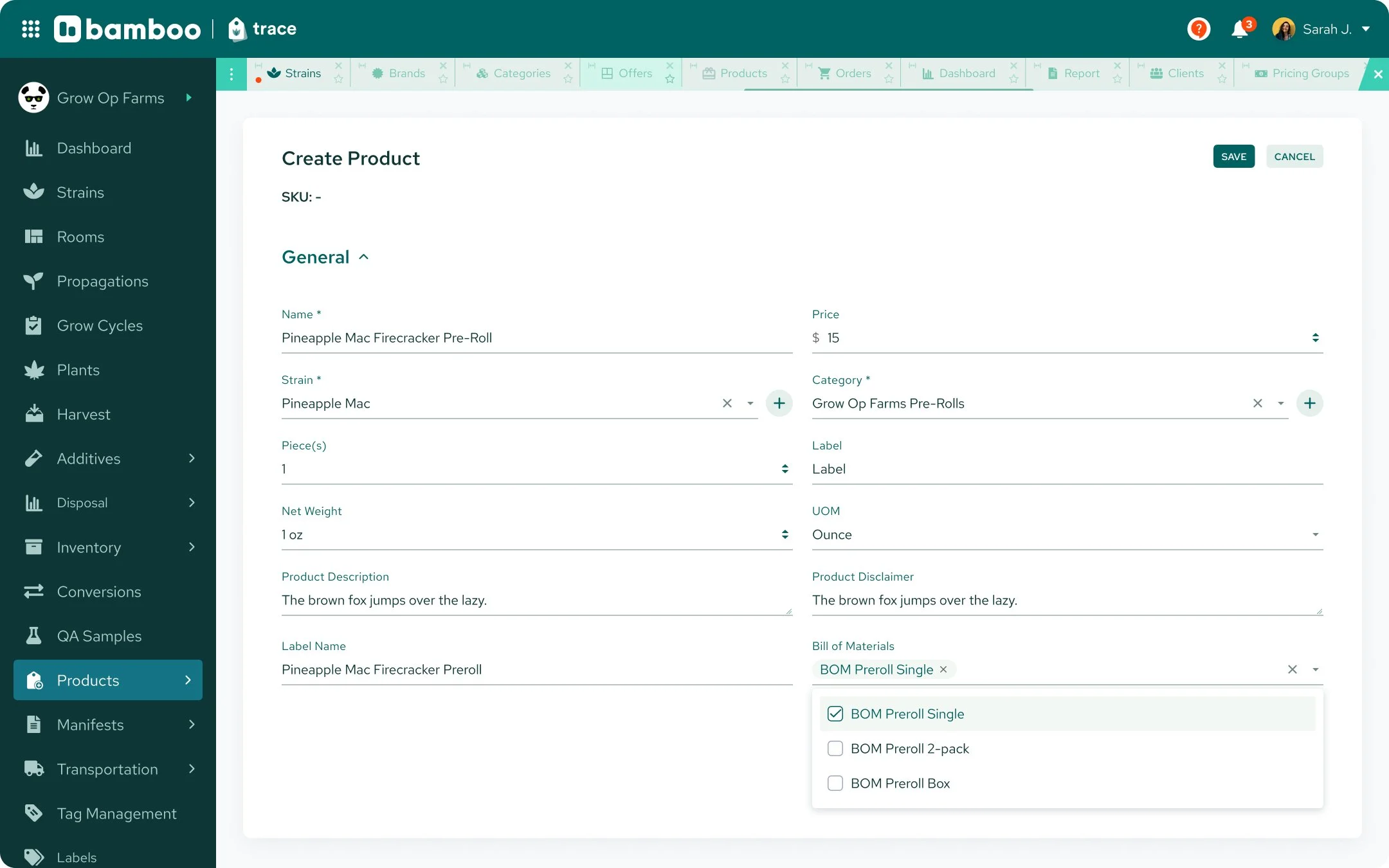
Finally, users attach one or multiple Bills of Materials to finished products from the Products table or from the Product Profile. Note that BOMs can also be attached to finished products during the initial creation of the BOM.
This allows:
Faster product creation
Standardized production
Easier maintenance
Shared material definitions across similar products
When materials are updated, those changes can be reflected wherever the BOM is used, reducing maintenance effort and improving consistency.
Key Takeaways
Designing enterprise software isn't about reducing complexity—it's about organizing it.
By breaking manufacturing into clear, reusable workflows, we transformed a traditionally spreadsheet-driven process into an intuitive experience that supports both growing businesses and large-scale operations.